
Cart
You have no items in your shopping cart
|
#1 CUSTOM GOLF CLUB FITTING IN ATLANTA
CLUB FITTING SERVICES
|
770-435-1934 |
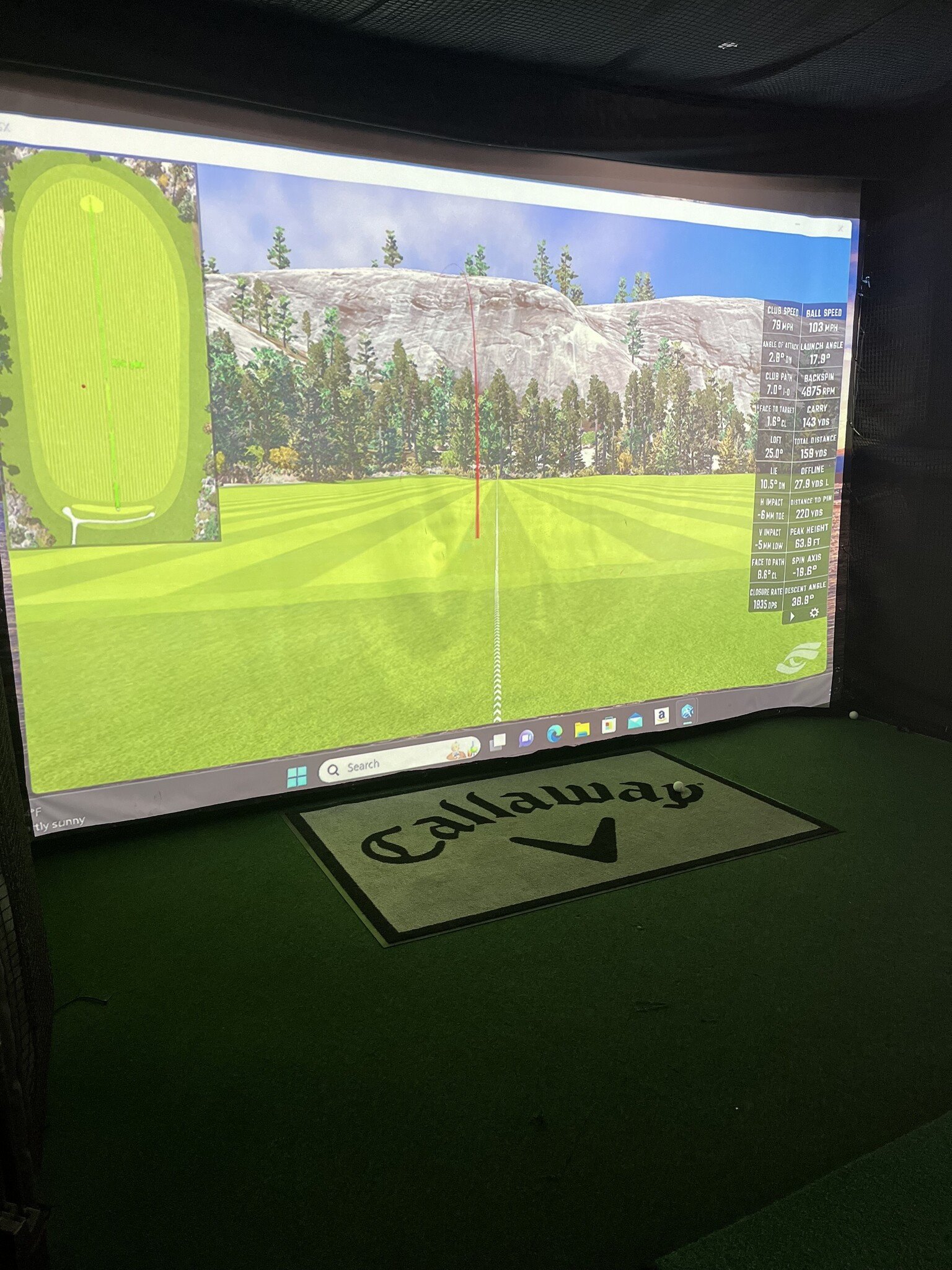
Custom Iron FittingOur most popular iron fitting session, designed to identify the perfect iron model and specifications for your unique swing. Using the industry-leading Foresight GC Quad, we analyze every detail of your ball flight and club delivery while you test multiple iron heads and shafts.
Time: Approximately 1 hour Get professionally fit today. Call for an appointment. |
Driver Fitting Deluxe
|
Best suited for someone interested in buying a full set. Elements of Iron Fitting Deluxe and Driver Fitting Deluxe all inclusive and advice on how to configure the whole bag.
Time: Approximately 1.5 hours
Cost: $150
Dynamic Lie Angle AnalysisMark up customers club with reflective tape and strike several shots on GC Quad Launch Monitor for the discovery of dynamic lie angle Time: 15 -20 mins |
Bag MappingFull Launch Monitor Mapping of your bag of clubs. The system will walk you through hitting each of your clubs in your bag and issue several reports at the end with how far you hit each club / as well as left or right tendencies and gap exposures. Great way to improve based on a real and honest assessment of your club distances. Time: Approximately 1 Hour |
Our Technology:
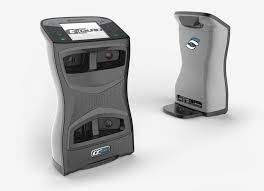
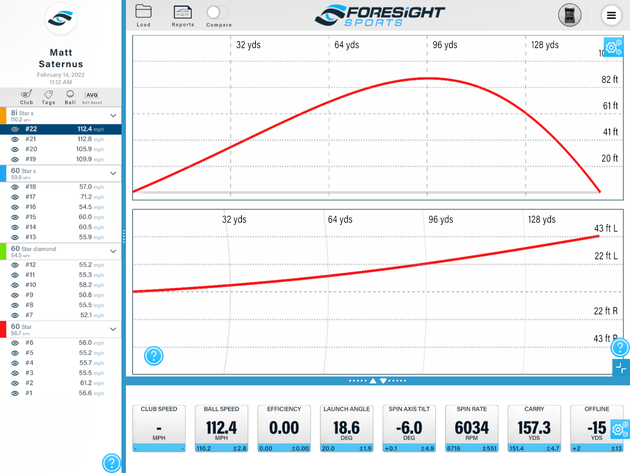
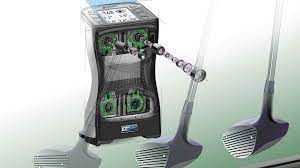
Foresight Sports launch monitors use a combination of infrared object tracking and high-speed, high-resolution camera-based technology to precisely measure every aspect of clubhead and ball launch performance. By capturing thousands of images per second, building a virtual 3D model, and then analyzing a multitude of data components, our technology is able to create the most accurate and complete picture of your ball and club head performance – and deliver the results in nearly real-time.
Unlike radar-based technologies that analyze ball and club head performance results from the worst possible position (behind the clubhead) and then largely calculate performance based on the geometric center of the clubhead, Foresight Sports launch monitors use exact photometric measurements taken with a clear, direct view of the impact window.
Our launch monitors measure – not calculate – club head data based on the club’s face plane, deriving vastly more precise results.
Ball launch data is measured by capturing images of the ball to model it in real-time, and comparing it to the next captured image to determine exactly what the ball is doing post-impact.
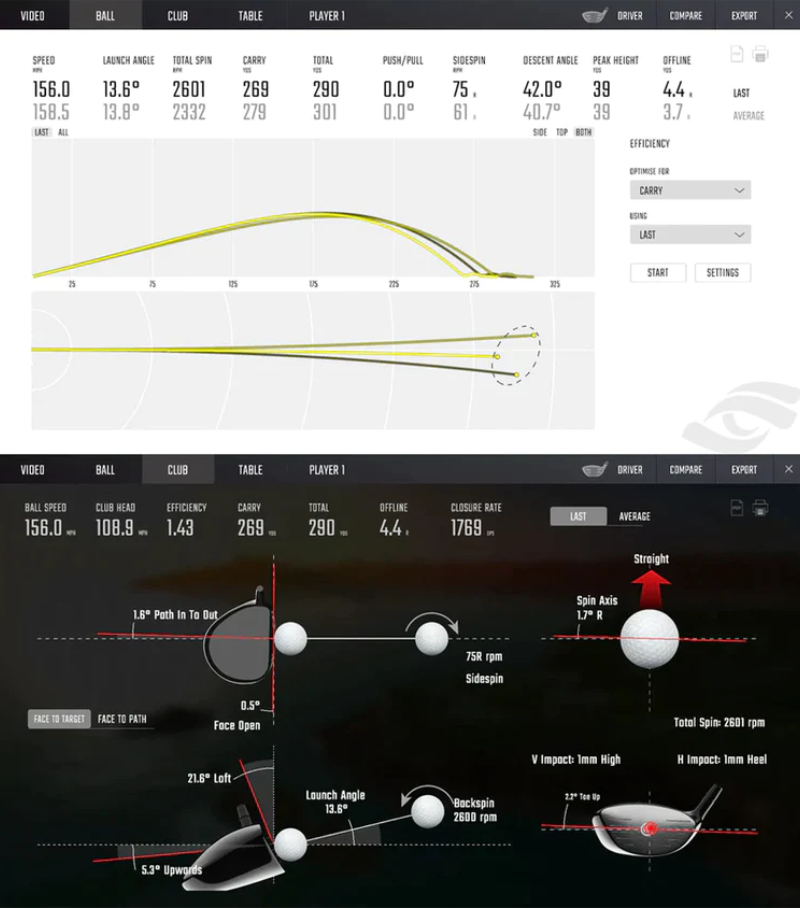
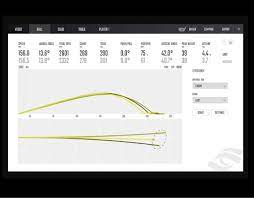
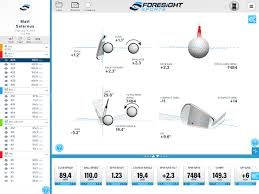
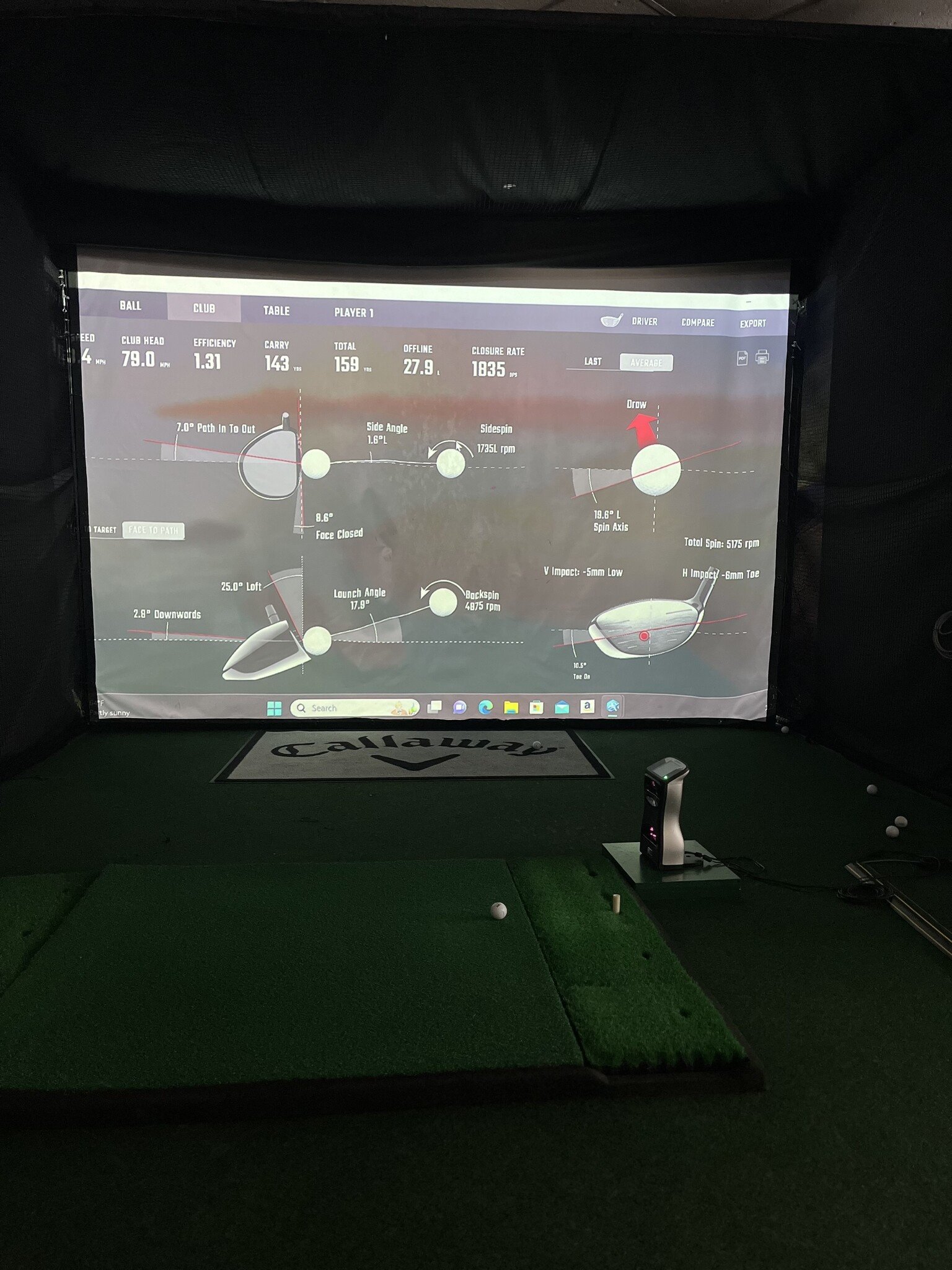
Here are the key club and ball performance metrics our GC launch monitors measure.
|
BALL SPEED The measurement of the golf ball’s velocity just after impact. Ball speed is the main component in generating distance. |
|
LAUNCH ANGLE The initial vertical angle of ascent relative to the ground plane measured in degrees. The launch angle, combined with ball spin and speed, will determine the ball’s carry and total distance. |
|
AZIMUTH The initial horizontal angle relative to the target line. The azimuth, combined with side spin, will determine the final ball position range relative to the target line. |
|
TOTAL SPIN The amount of total spin created around the tilt axis is expressed as total spin. This will determine the curve and lift of the shot. |
SPIN-TILT AXIS
One of the most important pieces of data measured by our launch monitors is the spin-tilt axis. The spin-tilt axis is the axis that the golf ball rotates around to create shot curvature and lift.
CLUB SPEED
The velocity at which the head travels, measured just prior to ball contact.
IMPACT POINT
The measurement of the contact point of the golf ball on the club face relative to face center.
ANGLE OF ATTACK
The descending or ascending path of the club head, measured in degrees.
CLUB PATH
The swing path measured in a horizontal plane relative to the target line. This data point will tell you if the club was moving from inside-out, outside-in, or perfectly down the line.
DELIVERED FACE ANGLE
The dynamic measurement of the club head’s face plane position square to the target line.
DELIVERED LIE ANGLE
The lie of the club is the way the club compares to the ground through the hitting area. This is a dynamic measurement, and it is relative to the ground plane. A negative number means the club is “toe down” at impact, while a positive number means the club is “toe up.”
IMPACT LOFT
The dynamic measurement in degrees of the club head’s face plane position vertically relative to the ground plane.
CLOSURE RATE
The rotation of the club head heel to toe measured about the shaft in degrees per second or rpm.
There are many different body types, setups, and swings. It is obvious that one golf club is not going to fit every golfer. Custom Club Fitting is the process of selecting a set of variables in a golf club that complements the golfer's unique set of tools that is his/her natural golf swing. In other words - customizing the club to the golfer rather than the opposite. We consider the following criteria when fitting someone for a club(s):
A standard 5 iron is 38 inches long. The length of an iron that is right for each golfer depends on essentially how far his/her hands are from the ground at address. This distance is determined by (1) player height (2) setup and (3) arm length. We use a well-researched and time-tested chart to determine what length is ideal for the golfer. You can literally have 3 different golfers that are the same height that uses 3 different length iron shafts. In general, the length of a driver and/or fairway wood is determined more by club balance tolerances rather than player height. Metal woods are longer anyway and the length is somewhat "subjective" (meaning there is no right or wrong answer). We would rather see a tall person swinging a shorter driver that swing-weights perfectly than that same golfer extending the driver to be more comfortable but winding up with a swing weight that is much too heavy for the balance of that particular club.
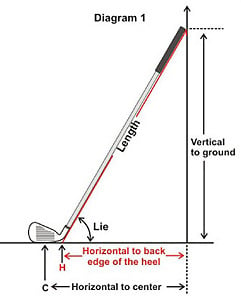
Lie angle normally only applies to irons since metal woods are not adjustable. The lie angle of a club is the angle that the sole of the club makes with the shaft of the club. A typical lie angle for a 5 iron is 61 degrees. Lie angle importance increases as the loft of the club increases because a wrong lie angle with a lofted club actually "points" the face offline. As a rule of thumb, for every 1 degree that your lie angle is wrong, the ball will start 4 yards offline. Do not just assume that your lie angle is correct. You have approximately a 1 in 5 chance of that being the case - not something we'd bet on. Custom Fitting for lie angle is "Dynamic" - we measure it when you swing. A common myth is that one can determine the lie angle of the club by how the club looks at address. Although there is a little correlation, the correlation is very loose. You need to be fit for lie angle by swinging the club and letting our experts interpret the results.
The loft of a club is what gives the ball its lift in the air. Although the loft of an iron can be adjusted for various purposes, one is not "fit" for an iron loft. Fitting for loft applies to drivers mainly. For every ball velocity, there is an ideal launch angle and backspin combination that produces the longest distance. Any change in any of the 2 variables whilst keeping the other fixed means a change in distance. As ball velocity decreases, it is necessary to launch the ball higher to obtain maximum distance. Conversely, the faster the ball speed, the lower the trajectory needs to be. There are other considerations to be made with driver loft. One important note is the fact that a higher loft produces less sidespin and more backspin. Less sidespin means straighter shots. A balance should be achieved between accuracy and distance, so the golfer can find the greatest success.
The shaft moves during the golf swing. This movement affects the feel, control, and distance. The faster a golfer swings or the more he/she "loads" the shaft, the less flex the golfer needs to be built into the shaft. The slower a golfer swings, the more flex built into the shaft can help with feel and distance. There is a proper balance to be achieved for feel, control, and distance when selecting a proper shaft. There are generally 5 different flexes available: Ladies, Seniors, Regular, Stiff, and Extra Stiff. Shaft flex does affect the trajectory of your shot. In general, more flex makes the ball go left, less flex makes it go right. More flex increases backspin which can make the ball go higher. Less flex decreases backspin which can make the ball go lower. Different shafts also have different "kick points". A higher kick point produces a lower ball flight. A lower kick point produces a higher ball flight. Shaft weight and shaft torque rating are also important.
Grips vary in size because hands vary in size. A larger hand needs a larger diameter grip to "fit". A smaller hand needs a smaller grip. There is some subjectivity with grips in that a "natural feel" of a smaller or larger grip than what is theoretically correct is sometimes acceptable. Some feel that a larger grip makes the club easier to control. Others feel that a smaller grip is easier to swing the club faster. As in other fitting variables, proper consideration must be made to decide the right grip size.
If you have read this carefully then you should realize that there are a lot of considerations to be made when choosing fitting variables. We at Golf Warehouse Atlanta take pride in having a tremendous amount of experience with club fitting. You will find that our fitting process is very "interview" oriented. Considerations must be made in terms of your tendencies as well as your realistic expectations of the future of your game. We are experts in club fitting near Atlanta, and we will be happy to help with your next driver fitting, iron fitting, wedge fitting, putter fitting, or full bag fitting.
Call us at 770-435-1934 for an appointment. We are eager to help. It's what we do.